Castello di Gradara
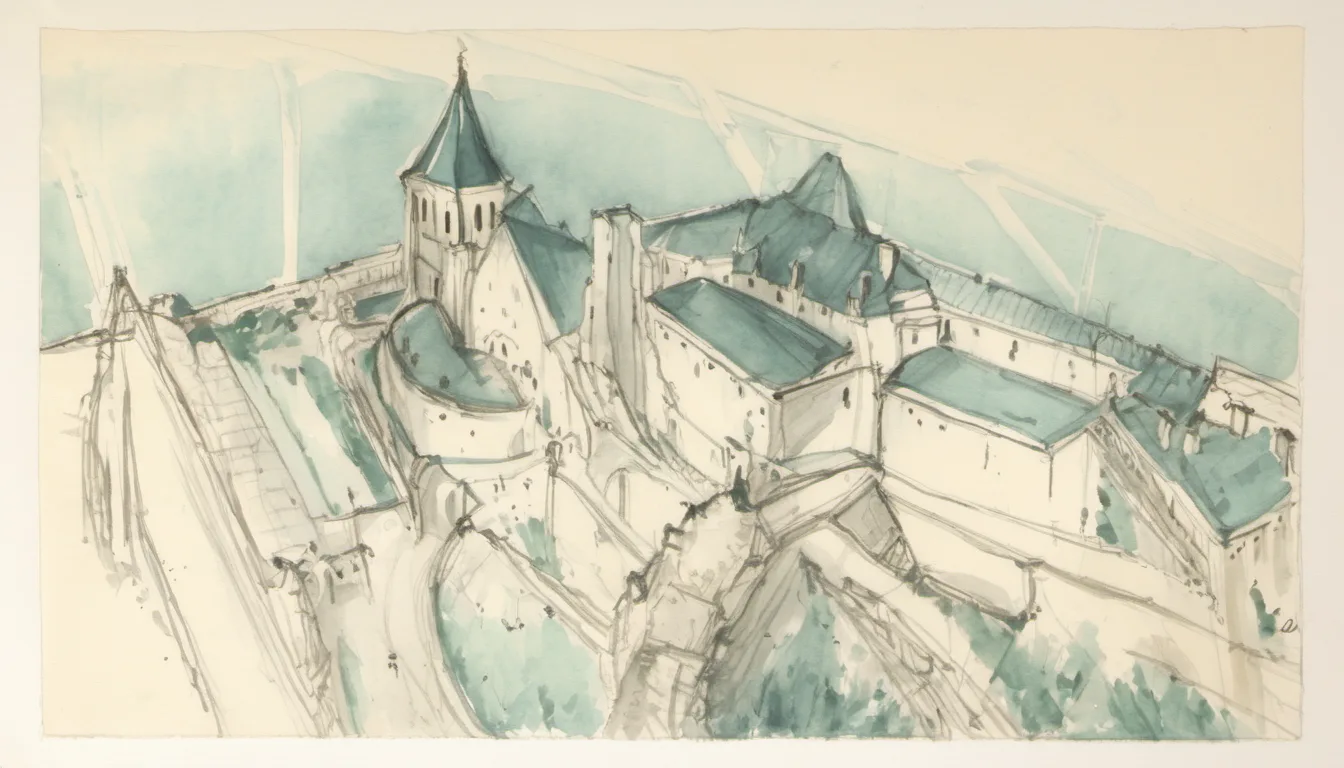
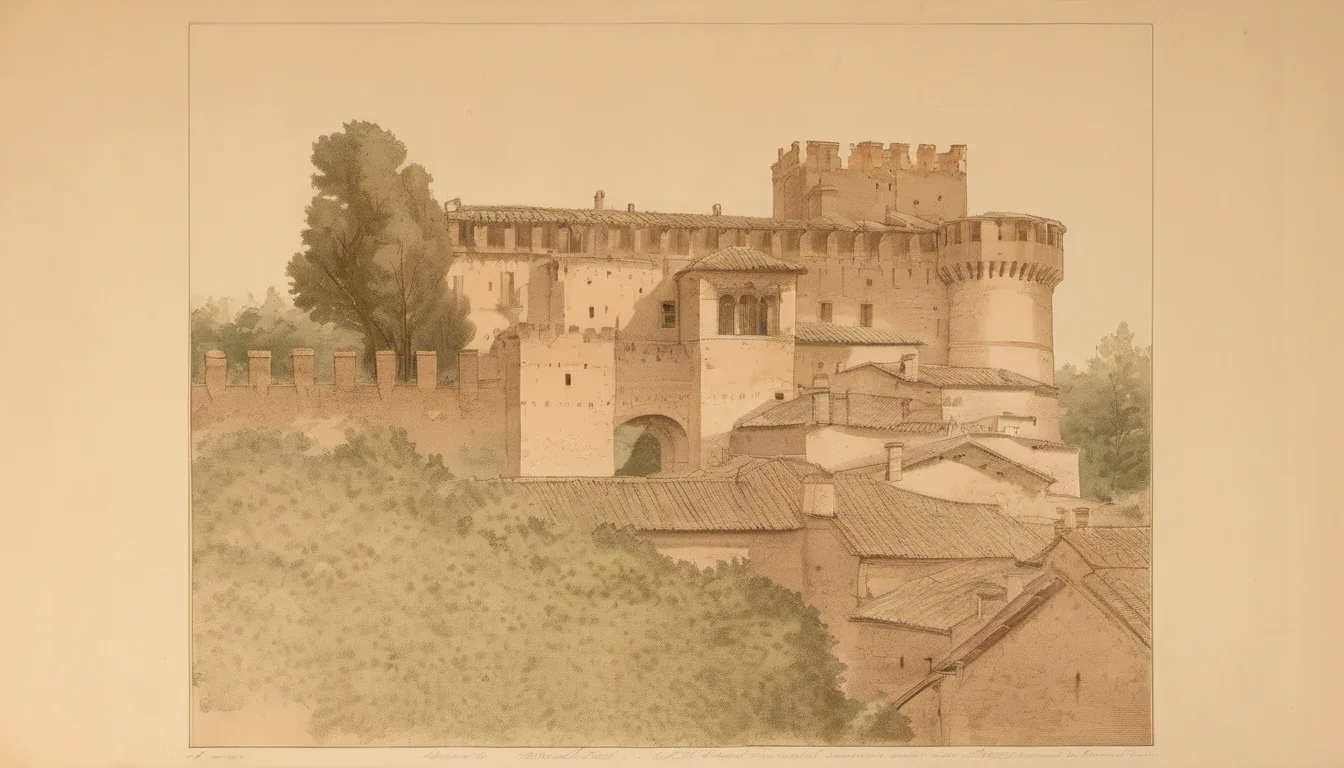
Approach Gradara from the coast road and the castle announces itself before the town does: a squared keep on a hilltop, ringed by two lines of medieval wall, the outer one running almost 800 metres around the base of the hill. The town sits in hill country at the far edge of the Apennines, barely six kilometres inland from the Adriatic and the San Bartolo promontory. At 142 metres above sea level, the fortress commands a wide horizon: the towers of San Marino to the south, the Rimini coastline to the east, the ridge of Carpegna inland. Seen at night, the lit ramparts above the huddled roofs of the historic village make one of the more striking silhouettes in the Marche.
The position made Gradara a crossing point long before anyone fortified it, and by the Middle Ages that made it a target. The castle as it stands took shape between the 11th and 15th centuries, a period in which the town sat at the center of the region's worst feuding: the Malatesta against the Montefeltro, papal militias against local strongmen, one Romagna family against another. Control later passed through the Della Rovere and the Mosca as well, but it was the Sforza who finally closed out the long Malatesta-Montefeltro conflict, a rivalry that had defined the fortress for three centuries.
What outlasted the fighting was a story. Legend holds that Gradara was where Paolo Malatesta and his sister-in-law Francesca were discovered together and killed by her husband, Gianciotto, a tragedy Dante folded into the Divine Comedy and, in doing so, fixed in the Italian imagination for good. A fortress that had spent three centuries as garrison and battleground became, through a few lines of verse, a monument to doomed love instead. It's the reason most people come, and the reason the castle is remembered less for its sieges than for two names carved into literature.
The village inside the walls is small, home to fewer than five thousand people, and lives off what the hill has long produced: ceramics and maiolica worked with the same patience the walls demanded, and olive groves that count Gradara among Italy's Città dell'Olio. It is listed among the country's most beautiful borghi and has flown the Touring Club's Orange Flag since 2004, recognitions earned by a town that never let its fortress overshadow the streets below it. The castle itself still draws crowds for concerts and museum exhibitions as much as for its walls, and remains one of the most-visited sites in the Marche, its silhouette still doing what it was built to do: watch the road from the hill.
Approach Gradara from the coast road and the castle announces itself before the town does. A squared keep rises on a hilltop, ringed by two lines of medieval wall, the outer one running almost 800 metres around the base of the hill, making the whole structure look less like a residence than a machine built for one purpose. Seen at night, when the ramparts are lit and the huddled roofs of the historic village crowd in below them, it is one of the more striking silhouettes in the Marche, and the reason the castle draws more visitors than almost anything else in the region.
The setting does the rest of the work. Gradara sits at 142 metres above sea level in hill country at the far edge of the Apennines, barely six kilometres inland from the Adriatic and the San Bartolo promontory. From the walls the horizon runs wide: the towers of San Marino to the south, the Rimini coastline to the east, the ridge of Carpegna inland. It is a border landscape in more than one sense — some Romagnol writers have argued Gradara belongs historically to Romagna rather than the Marche, a claim the town itself has never quite settled either way.
That position, useful for a view, was even more useful for control of the roads beneath it. Gradara had been a crossroads of traffic and people since antiquity, and the Middle Ages turned that usefulness into a target. The castle as it survives today took shape gradually, built and rebuilt between the 11th and the 15th centuries, exactly the period in which the town became one of the main battlegrounds of the region's worst feuding. Militias loyal to the papacy fought the turbulent families of Romagna and the Marche; most of all, and most persistently, the Malatesta of Rimini fought the Montefeltro of Urbino, back and forth, for generations, each side taking the fortress only to lose it again.
The fighting did not end quickly, and it did not end with either family. Control of the castle later passed through the Della Rovere and the Mosca as well, a long relay of ownership that only stopped once the Sforza took the fortress and, with it, closed out the Malatesta-Montefeltro conflict for good. By then Gradara had spent the better part of three centuries as a prize worth killing for, changing hands more often than most of its garrisons can have found reassuring.
It is also, improbably, a monument to something gentler. Legend holds that within these walls Paolo Malatesta and his sister-in-law Francesca were discovered together and killed by her husband, Gianciotto — a private tragedy that might have stayed private if Dante had not folded it into the Divine Comedy. He didn't just record the story; he made it permanent, giving Paolo and Francesca a scene in the Inferno that Italian schoolchildren still learn by heart centuries later. A fortress built for siege and reprisal became, through a few dozen lines of verse, shorthand for doomed love instead. It's the story most visitors come for, and the reason the castle's military history — the walls, the feuds, the centuries of changing hands — tends to arrive as a surprise rather than the headline.
Inside the walls, the town rewards slower attention than the castle alone invites. A clock tower marks the old center; beneath the fortress, a historic museum opens into medieval caves cut into the hillside; a scatter of named houses and palazzi — the merchant's house, the Palazzo Rubini Vesin, the so-called Owl House — trace what a working medieval settlement, rather than just a garrison, actually looked like. There's a further keep, La Rocchetta, and two churches serving a population that municipal records put at under five thousand.
One more site sits at odds with all the medieval stonework: the Gradara War Cemetery, a quiet reminder that this stretch of the Marche coast was fought over again in the twentieth century, long after the Malatesta and the Sforza had gone and been mostly forgiven by history.
The town living inside those walls today is more mixed than its skyline suggests. Recent municipal data counts several hundred foreign residents, a small but real share of the population, with the largest communities arriving from Romania, Ukraine, and Poland — a modern layer of movement in a place whose entire identity was built on being a crossroads.
The economy has stayed close to the hill it sits on. Ceramics and maiolica remain the most visible traditional craft, worked with a technique old enough to predate most of the buildings around it. The surrounding countryside has earned Gradara a place among Italy's Città dell'Olio, its olive-producing towns, and the settlement as a whole is listed among the country's most beautiful borghi and has flown the Touring Club Italiano's Orange Flag since 2004 — recognition, essentially, that the streets are worth as much attention as the fortress looming over them. A civic coat of arms and gonfalone, granted by presidential decree in 1998, gave the town an official emblem to match a reputation centuries older.
Gradara also keeps a lighter, more recent tradition alive: from 1991 to 2002 it hosted Gradara Ludens, one of Italy's earliest festivals dedicated to games, before the event lapsed for two decades. It returned in 2023 under artistic director Beniamino Sidoti, a small sign that a town built for war and remembered for tragedy still finds room for play.
None of it — the walls, the feud, the war cemetery, the games festival — quite explains why Gradara is remembered chiefly for two lovers who, according to legend, never got the chance to grow old there. That is the strange durability of the story Dante told: centuries of siege and succession behind it, and it's still the tragedy that sells the tickets.