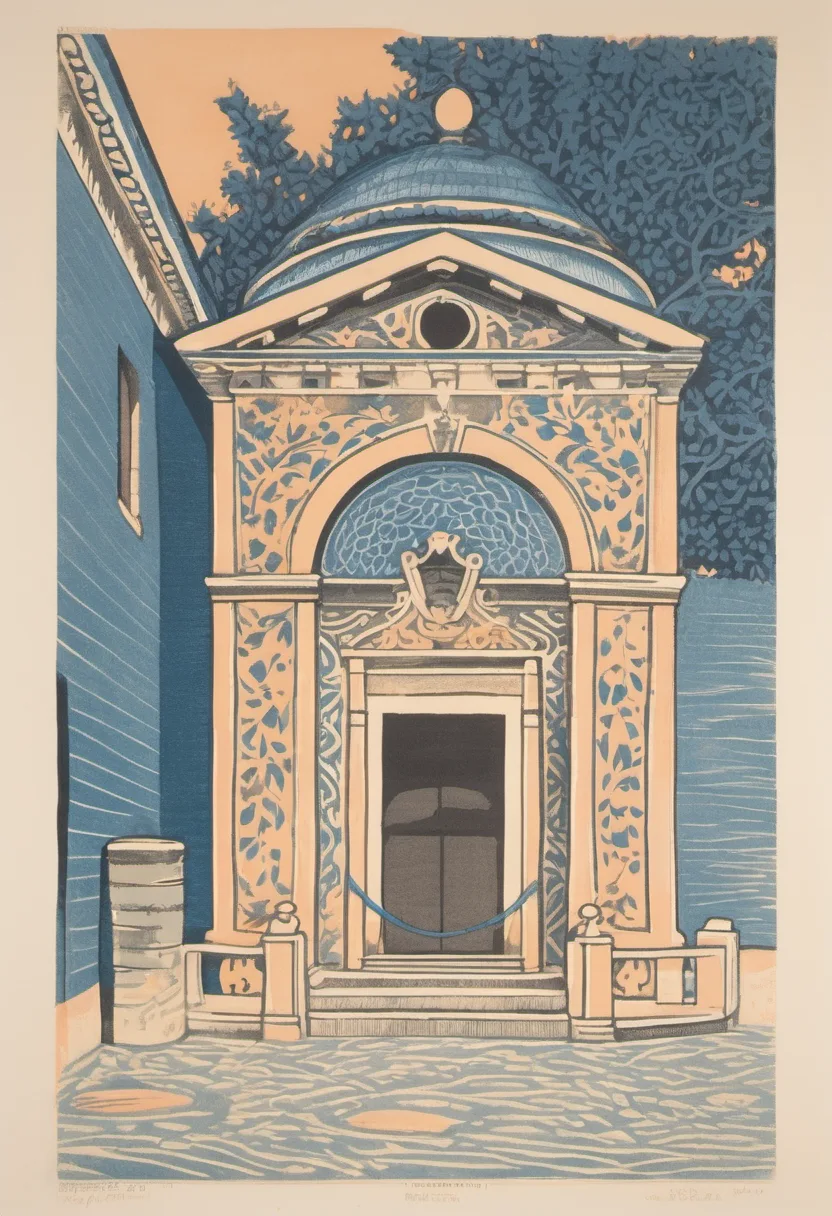
Ravenna, Italy
Ravenna does not shout; it whispers in gold and glass. To walk its streets is to step into a suspended moment of the early Middle Ages, where the Roman Empire’s final breath was preserved not in stone alone, but in light. This is not a city of grand piazzas or bustling markets, but of hushed sanctuaries and ancient secrets. The air here feels thicker, charged with the residue of emperors and bishops who once vied for control over this strategic Adriatic port.
The city’s singular value lies in its mosaics. These are not mere decorations but theological statements rendered in tesserae, capturing the gaze of the faithful across fifteen centuries. From the Mausoleum of Galla Placidia to the Basilica of San Vitale, the walls shimmer with images of Christ, emperors, and apostles. Walking Ravenna is an act of looking—really looking—at how light interacts with history. The sun moves across the apse, and the figures seem to breathe, shifting from solemnity to radiance as the day progresses.
Why walk it? Because the scale is human, yet the ambition is cosmic. You move from one basilica to another, each a masterpiece of its time, separated by short, quiet streets. There is no rush here. The city invites you to slow down, to stand before a wall and let the gold leaf absorb the afternoon sun. It is a place for contemplation, for understanding how a declining empire projected its eternal vision onto the walls of its final capitals.
You will find no loud nightlife or trendy cafes dominating the historic center. Instead, you will find silence, dust motes dancing in shafts of light, and the faint echo of Latin chants. Ravenna rewards the patient observer. It is a city that asks for your attention and gives back a sense of timelessness. It is not about checking boxes; it is about feeling the weight of history in your hands, touching the cool stone, and seeing the divine in the detail.
Ravenna’s story is one of survival, of art outlasting power. In the fifth century, as the Western Roman Empire crumbled under the weight of barbarian invasions, the capital was moved from Milan to Ravenna. Its location, protected by marshes and accessible only by water, made it defensible. Here, in this fragile safety, the last emperors of Rome, and later the Ostrogothic kings and Byzantine exarchs, poured their resources into a new kind of architecture: one that looked not to the earth, but to heaven.
The result is the most concentrated collection of early Christian and Byzantine mosaics in the world. These are not the flat, stylized images of later medieval art, but vibrant, three-dimensional scenes that seem to float on the walls. The technique was laborious: each piece of glass, stone, or gold leaf (tessera) was set at a slight angle to catch the light of oil lamps and candles. The result was a shimmering, living surface that changed with the time of day, creating a mystical atmosphere that was intended to transport the worshipper to the divine realm.
The Mausoleum of Galla Placidia, built in the 430s, is the smallest but perhaps the most profound. Galla Placidia, daughter of Emperor Theodosius I and sister to Emperor Honorius, commissioned this tomb for herself and her husband. Inside, the ceiling is a deep blue sky, studded with gold stars, surrounding a cross that holds the four evangelists. The walls depict Christ as the Good Shepherd, leading his flock, and the apostles Peter and Paul. The scale is intimate, the colors are rich, and the effect is overwhelming. It is a place of quiet awe, where the boundary between the earthly and the heavenly dissolves.
Further on stands the Basilica of San Vitale, completed in 547. This octagonal church, with its central dome and ambulatory, is a masterpiece of Byzantine architecture. The mosaics here are more political than theological. In the apse, Christ sits on a globe, handing the crown of martyrdom to San Vitale. On the north wall, Emperor Justinian and his court appear, bearing gifts. On the south wall, Empress Theodora and her attendants are shown. These figures are not idealized; they are portraits, with distinct features and expressions. They are here to assert the authority of the Byzantine Empire over Italy, to show that the Emperor and Empress are God’s chosen rulers on earth.
The Basilica of San Apollinare Nuovo, originally built by the Ostrogothic King Theodoric the Great in 494, is another key site. Theodoric, an Arian Christian, built this church for his own use. After the Byzantine conquest, it was converted to Orthodoxy, and the original mosaics depicting Theodoric and his court were removed. In their place, new mosaics were created, showing processions of martyrs and virgins. The lower register, however, still shows the original scenes of daily life: shepherds, merchants, and animals. This layering of history is unique to Ravenna, where different religious and political regimes left their mark on the same walls.
The Basilica of San Apollinare in Classe, located a few kilometers outside the city center, is the oldest and largest. Built in 549, it was the cathedral of Ravenna’s bishops. The mosaic in the apse shows Christ on a mountain, flanked by apostles and saints. Below, the landscape is depicted with trees, birds, and animals, a rare example of secular nature in early Christian art. The basilica is in ruins, but the apse remains intact, a testament to the enduring power of Byzantine art. The surrounding cemetery, with its many tombs and inscriptions, adds to the sense of history and loss.
Ravenna’s history is also one of political intrigue and cultural exchange. The city was a meeting point of East and West, of Roman and barbarian traditions. The Ostrogoths, who ruled Italy from 493 to 553, were Arian Christians, in conflict with the Nicene Christians of the Byzantine Empire. This religious tension is reflected in the architecture and art of the period. Theodoric the Great, the Ostrogothic king, was a patron of the arts, but his relationship with the Byzantine Empire was complex. He built the Mausoleum of Theodoric, a unique octagonal building with a single monolithic stone roof, which remains unfinished and mysterious.
The city’s decline began in the Middle Ages, as the marshes around it became unhealthy and the port silted up. The center of power shifted to other cities, and Ravenna fell into obscurity. It was not until the nineteenth century, with the work of archaeologists and historians, that the city’s importance was rediscovered. The mosaics, hidden for centuries under plaster and whitewash, were uncovered and restored. Today, Ravenna is a UNESCO World Heritage Site, a place of pilgrimage for art lovers and historians.
Walking Ravenna is a journey through time. You start in the city center, with its narrow streets and quiet squares. You visit the Mausoleum of Galla Placidia, with its intimate and profound mosaics. Then you move to San Vitale, with its grand and political images. You walk to San Apollinare Nuovo, with its layered history. Finally, you take a short bus ride to San Apollinare in Classe, with its ruins and landscape. Each site is different, yet they are all part of the same story: the story of a city that survived, and of art that outlasted power.
The city is also known for its poetry. Dante Alighieri, the great Italian poet, chose Ravenna as his place of exile and death. He is buried in the city, near the Basilica of San Francesco. Dante’s presence adds another layer to Ravenna’s history, connecting it to the great literary tradition of Italy. His tomb, with its simple inscription, is a place of quiet reflection, a reminder that Ravenna has been a place of refuge for some of the greatest minds in history.
In conclusion, Ravenna is a city of light and shadow, of gold and stone. It is a place where the past is present, where the walls speak, and where the soul can find peace. To walk Ravenna is to walk through history, to see the divine in the detail, and to understand the power of art to endure. It is a city that demands your attention, and rewards it with a sense of timelessness. It is not a city for the hurried, but for the contemplative. It is a city that whispers, and if you listen, you will hear the echo of empires, the murmur of saints, and the silence of gold.
Do not miss around Ravenna
11 placesEvery place below is a ten-to-fifteen minute walk from the last.