Teatro Farnese
In 1618, Ranuccio I Farnese, Duke of Parma and Piacenza, ordered a theatre built inside his palace to mark the passage through the city of Cosimo II de' Medici, Grand Duke of Tuscany, en route to Milan to honor the newly canonized San Carlo Borromeo. Ranuccio had seen the Teatro Mediceo in Florence in 1586, while negotiating to marry Maria de' Medici, a match that fell apart under political pressure from Spain. He wanted something to rival it.
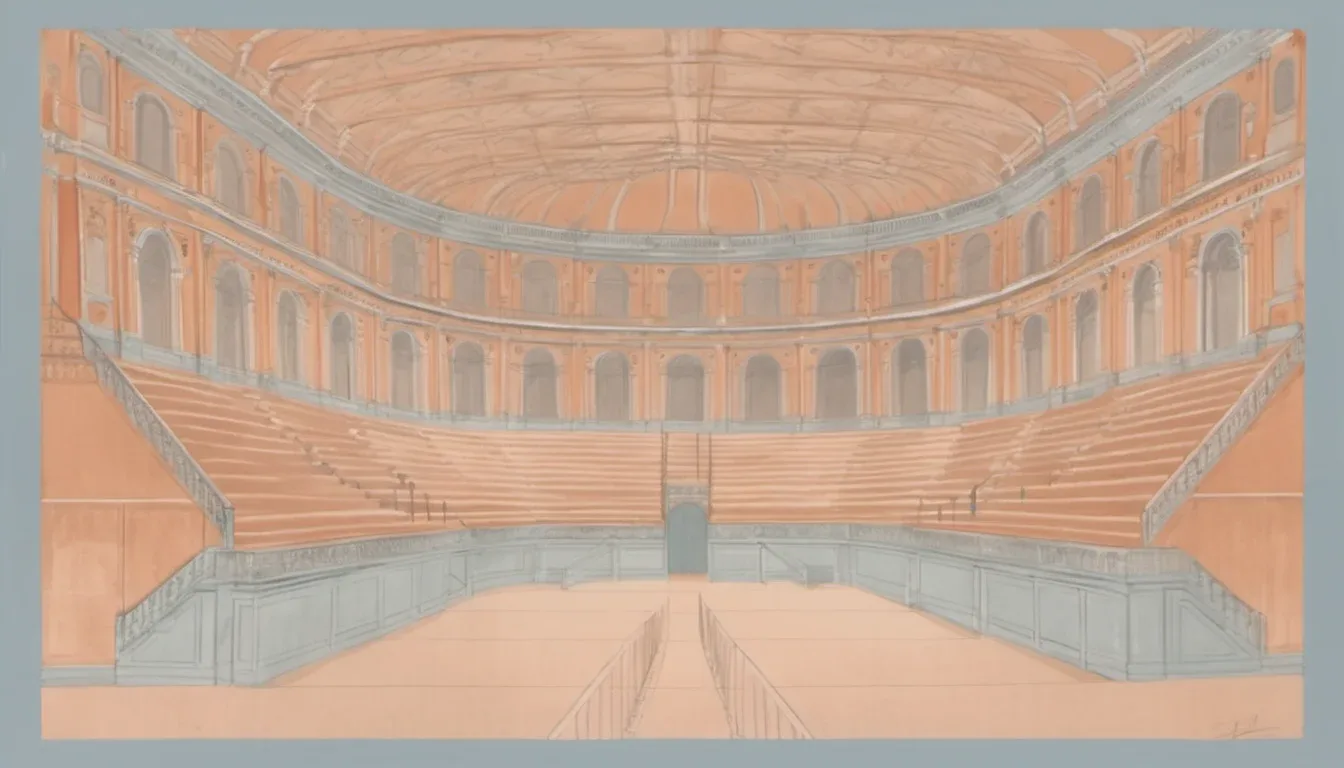
The commission went to Giovan Battista Aleotti, known as l'Argenta, who built it on the first floor of the Palazzo della Pilotta, in a hall used until then as an armory and jousting ground. He looked to two other Renaissance theatres for guidance, the Teatro Olimpico in Vicenza and the Teatro all'Antica in Sabbioneta. What rose was enormous: 87 metres long, 32 wide, 22 high, a U-shaped bank of fourteen steps for some 3,000 spectators, topped by two tiers of serliane, Tuscan below and Ionic above, facing a stage 40 metres deep with a 12-metre opening. Built almost entirely of Friulian spruce, it was coated in painted stucco to pass as marble, and dedicated that autumn to Bellona, goddess of war, and to the Muses.
Then nothing happened. Cosimo II fell ill, the pilgrimage was cancelled, and the theatre sat empty for nearly a decade. It finally opened on 21 December 1628, for the wedding of Ranuccio's son Odoardo to Cosimo's daughter Margherita de' Medici. The spectacle was Mercurio e Marte, words by Claudio Achillini, music by Claudio Monteverdi, sets by Francesco Guitti, and at its climax the cavea was flooded for a staged naval battle. Such productions were so costly that the theatre was used only eight more times. The last was in 1732, for the arrival of Don Carlos of Bourbon.
After that, decline set in, and it continued for two centuries. An Allied air raid on 13 May 1944 nearly destroyed the theatre. It was rebuilt between 1956 and 1960 to the original designs, using salvaged material, and reopened in 1962 as the grand entrance to Parma's Galleria Nazionale.
Theatre returned to it almost by accident, after nearly three hundred years of silence. A tribute to Luigi Nono in 1990 was followed by the first Fondazione Prometeo festival in 1991, a production of Hamlet in 2002 with Elisabetta Pozzi in the title role, and Luca Ronconi's staging of John Ford's 'Tis Pity She's a Whore in 2003, cast twice, once with established actors, once with an all-male young ensemble in the Elizabethan manner. In 2011, Claudio Abbado conducted his Orchestra Mozart there before 1,500 people, far beyond the 200 once thought the limit. Today the theatre sits inside the Galleria Nazionale's route, and occasionally hosts concerts and opera staged by the Teatro Regio di Parma.
Ranuccio I Farnese built a theatre inside his palace for a guest who never arrived. In 1618, the Duke of Parma and Piacenza ordered it raised to mark the passage through the city of Cosimo II de' Medici, Grand Duke of Tuscany, who was expected en route to Milan to honor the tomb of the newly canonized San Carlo Borromeo. Ranuccio had a model in mind: the Teatro Mediceo in Florence, which he had seen in 1586 while negotiating to marry Maria de' Medici, a match later broken off under political pressure from Spain. He wanted Parma to answer Florence in kind.
The commission went to Giovan Battista Aleotti, called l'Argenta, and the site he chose was already loaded with meaning: the first floor of the Palazzo della Pilotta, in a hall that had been designed as a Salone Antiquarium, a gallery of antiquities, but was, until then, used instead as an armory and a venue for tournaments. Aleotti looked to two recent Renaissance theatres for his design, the Teatro Olimpico in Vicenza, built by Palladio in 1580, and the Teatro all'Antica in Sabbioneta, built by Vincenzo Scamozzi between 1588 and 1590. What he produced surpassed both in scale.
The hall runs 87 metres long, 32 wide, 22 high. Inside it, a U-shaped cavea of fourteen steps could seat around 3,000 people, crowned by two tiers of serliane, the lower Tuscan order, the upper Ionic. Facing them, a stage 40 metres deep opened onto the hall through a 12-metre proscenium. Some historians count it among the first theatres built with a permanent proscenium arch, though the irony is that when it went up, plays were not yet performed inside it at all.
None of it was stone. The whole structure was timber, red spruce brought from Friuli, dressed entirely in painted stucco made to pass as marble, the standard trick of ephemeral festival architecture, built to dazzle rather than endure. It was built, in other words, as scenery for a single grand occasion rather than as a permanent monument, which makes its survival, on and off, for more than three centuries rather remarkable. The sculpture, mythological figures modeled in plaster over straw cores, was overseen by Luca Reti and his workshop. The painting, the walls, and a since-lost ceiling, was the work of a team led by Giovan Battista Trotti, known as il Malosso, alongside Lionello Spada, Sisto Badalocchio, Antonio Bertoja, and Pier Antonio Bernabei. Finished that autumn, the theatre was dedicated to Bellona, goddess of war, a nod to the hall's old life as an armory, and to the Muses.
Then it sat idle. Cosimo II fell ill, the pilgrimage to Milan was called off, and the theatre Ranuccio had built for him went unused for almost ten years. It finally opened on 21 December 1628, not for Cosimo, but for a wedding: Ranuccio's son Odoardo married Cosimo's daughter Margherita de' Medici, and the Farnese and Medici families were bound together after all.
The inaugural spectacle was Mercurio e Marte, with a text by Claudio Achillini, music by Claudio Monteverdi, and stage design by Francesco Guitti. At its centerpiece, the cavea was deliberately flooded and a naumachia, a staged naval battle, was fought out on the water in front of the assembled court. It was theatre as engineering spectacle, and it cost accordingly.
That expense is why the Teatro Farnese barely got used. Productions on this scale were too complex and too costly to repeat often, and in over a century of existence the theatre hosted performances only eight more times beyond its opening. The last was in 1732, marking the arrival of Don Carlos of Bourbon in the duchy. After that, nothing.
Decline followed, slow and then sudden. The theatre fell into disuse for generations, and on 13 May 1944 an Allied air raid very nearly finished the job the neglect had started, destroying most of the structure. It was rebuilt between 1956 and 1960, following the original designs and using whatever original material could be salvaged, and reopened in 1962 as the entrance to Parma's Galleria Nazionale, a theatre that had spent most of its life empty, now doing duty as a doorway.
Live performance returned only recently, after nearly three centuries of near silence. In 1990, the Associazione Culturale Ensemble Edgard Varèse staged a tribute to Luigi Nono; the following year saw the first edition of the Fondazione Prometeo festival. In 2001, the Fondazione Teatro Due staged Shakespeare's The Tempest inside the theatre as part of a project called FarneseShakespeare, timed to the Verdi Celebrations. In 2002, Walter Le Moli directed Hamlet there, with Elisabetta Pozzi in the title role. In 2003, Luca Ronconi staged John Ford's 'Tis Pity She's a Whore in two parallel productions, one cast with established actors, the other with a young, all-male ensemble, reviving the Elizabethan convention of boys playing every part.
The theatre's real return to public life came on 12 June 2011, when Claudio Abbado conducted his Orchestra Mozart before 1,500 spectators, more than seven times the 200 people once considered the safe maximum. Today the Teatro Farnese is folded into the route of the Galleria Nazionale, and occasionally hosts concerts and opera staged by the Teatro Regio di Parma, alongside the art the gallery was built to hold. It is also, along with the Teatro all'Antica in Sabbioneta and the Teatro Olimpico in Vicenza, one of only three Renaissance theatres still standing anywhere. Visitors today walk the same U-shaped hall that once flooded for a staged naval battle, rebuilt after the war to look as it did when it was raised for a wedding no one alive remembers.